
Adjectives, Word Choice, and Economy in “Japanese Maple”

Japanese Maple: On Adjectives and Economy of Language
With Frederick Meyer
Japanese Maple – by Clive James
Overview — 0:00:00
Two topics intertwined: Clive James’s poem Japanese Maple—one of Frederick’s all-time favorites—and the craft of adjectives and adverbs: how they work, when they serve a piece of writing, and when they work against it. The poem is used as a lens, not just a subject. A few informal categories of adjectives emerge from close reading, along with a broader argument about economy of language and what it makes possible.
The Poem — 0:01:52
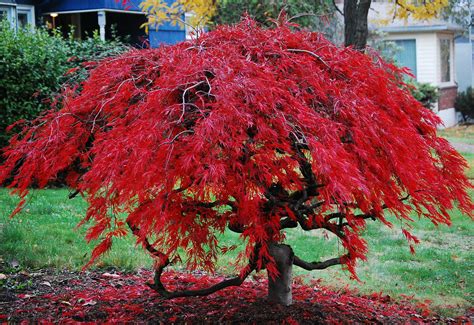
Clive James wrote Japanese Maple while dying of leukemia. His daughter had planted a Japanese maple in his back garden, and he set himself the task of living long enough to see it turn to flame in autumn. The poem is five stanzas of five lines each, written in loose iambic pentameter, with one shorter four-syllable line in the middle of each stanza that functions as a kind of fulcrum—interrupting the rhythm, creating a pivot.
Structure: Camera, Person, Fulcrum — 0:03:34
The poem opens in the second person—your death, near now—which Frederick initially described as third person before a participant gently corrected him. The distinction matters: your is the speaker addressing himself, and the effect is a kind of ironic remove, a man looking at his own dying with bemusement rather than grief. If it started my death, near now, the poem would feel too raw, too personal too quickly. The second person creates just enough distance to allow the opening’s quiet, rueful tone.
At the exact midpoint of the poem—line thirteen of twenty-five, the middle line of the middle stanza—the pronoun shifts. From now I take my share onward, the poem is fully first person. The ironic distance dissolves. The camera, which has been watching him from somewhere in the garden, pans around and then moves in through his eyes, ending up in the middle of his mind.
Each stanza’s short fourth-syllable third line acts as a fulcrum within its own five lines. Breath growing short. On that small tree. What I must do. As my mind dies. In each case the short line creates a rupture or a pivot—something shifts just before or just after it. And the middle stanza as a whole is itself a fulcrum for the entire poem, the turn from outside observation to interior experience. The form is organized concentrically: fives within fives, the turn at the center of everything.
By the final couplet we are not watching him—we are in his mind as it burns with color and then is gone.
The Adjective Map — 0:03:49
Frederick color-coded every adjective and adverb in the poem to map their emotional register. The result divides roughly into three groups.
The gray and doomy ones in the first stanza: near, easy, slow, real, short, uncomfortable. These create a flattened, matter-of-fact emotional tone—the feeling of someone taking stock of their own death with something like exhausted acceptance.
The rich and resonant ones that appear when the poem turns toward the tree and toward beauty: enhanced, sweet, fine, lavish, amber, brightly. These carry emotional charge. They are the moments when the poem’s saturation goes up.
And a large middle group that is purely utilitarian—small, brick, back, mirror, new, double, final. These are working adjectives: they give you the tree’s size, the garden’s walls, the window’s shape. They convey information without asking you to feel anything in particular.
What’s striking is how few adjectives of any kind there are in a poem about dying—and how matter-of-fact so many of them are. The poem isn’t emotionally spare; it’s emotionally overwhelming. But almost none of that is done with adjectives.
Two Types of Adjective Worth Distinguishing — 0:17:57
Intensifying adjectives and adverbs — 0:17:57
These are modifiers that mostly contribute size or intensity: a massive explosion, a devastating tragedy, a delicious feast, tumbled helplessly. They function like turning up the saturation on a photograph. If you have a feast, and then learn it was delicious, you haven’t learned what kind of feast it was—Indian or Italian, vegetarian or carnivore—you’ve just learned that as feasts go, it was a very feast-like feast. The adjective amplifies without specifying.
In Japanese Maple, the one intensifying adverb is brightly. It’s debatable—brightly does carry information (the mind is being burned by light, not heat or rage)—but its primary function is to amplify the verb shone. And it works precisely because it is the only word in the poem doing that job. The poem has not been running at heightened intensity throughout; when it finally opens the throttle, so brightly lands with the full weight of all the restraint that preceded it. Frederick’s analogy: it’s like not overexposing your photography. If everything is at maximum saturation by default, you have nowhere left to go.
Editorial adjectives and adverbs — 0:27:13
These are the ones that carry someone’s subjective experience explicitly into the language: it was incredibly hot, this was horrible news, it was an unbearable betrayal, he grinned ruthlessly. The risk is that when you read incredibly hot, you find yourself wondering: to whom? Is it incredibly hot to the narrator, or to one of the characters, or objectively to the world? If it’s not anchored clearly to a perceiving consciousness, it floats in space and can pull the reader slightly out of the writing.
The contrast with a utilitarian adjective is instructive. That small tree is technically subjective—the tree is huge to an ant—but it doesn’t trigger the to whom reflex. Readers accept it without friction. That unbearably small tree would stop a reader mid-sentence.
In Japanese Maple, the editorial adjectives—enhanced, sweet, fine, lavish—all pass the test because the poem has made it unambiguous whose experience they describe. When the rain is fine, that’s his perception. When the display is evermore lavish as the dusk descends, that’s what his extraordinary, heightened perception is making of the world. The poem earns these words because it has been so sparing and so grounded. When James says the beauty is sweet, that simple word lights up an entire interior world—and it can, because nothing else has been overstated to drown it out.
What the Nouns and Verbs Are Doing — 0:21:34
Almost all the brightness and intensity in the poem comes not from adjectives or adverbs but from nouns and verbs. Flame. Flood. Glistening. Burned. Shone. Bathe. These are doing the heavy lifting. The leaves don’t turn red or amber—they turn to flame. His mind doesn’t fail or fade—it is burned by the vision. The colors don’t disappear—they live on as his mind dies. The world doesn’t just look bright at the end—it shone. And then the world was gone.
A participant noted that in those final two lines—burned by my vision of a world that’s shone / so brightly at the last, and then was gone—the words burned, shone, and brightly form an interlocking cluster of light and fire. Burned points inward (his mind, consumed by what it sees), shone points outward (the world as it appears to him), and brightly bridges both directions: the world’s light burns him. Three words, one network.
The practical implication is that before reaching for an adjective, it’s worth asking whether a stronger noun or verb might do the same work without the additional word. He moved quickly is two words doing one thing. He ran is one word doing two: the movement and its speed, in a single syllable. Not always the right answer—he moved sprightly couldn’t be replaced so easily without losing the specific quality—but the question is worth asking.
Economy of Language — 0:44:00
Frederick’s preferred term for what Japanese Maple demonstrates is economy of language, not concision. Concision comes from the Latin root for cut, and tends to push writers toward fewer words for their own sake—toward Hemingway at his most stripped. Economy is neutral about quantity. A rich dish with many ingredients, every one of which is singing, is just as economical as a spare dish with two. The question is never how many? but what is each word delivering?
Poetry is language at its richest and most condensed—every word has to earn its place. But the principle extends to prose. In revision, the question is not whether to cut but whether each word—each adjective especially—is doing work that another word couldn’t do better, or that the noun and verb couldn’t do without it. Sometimes the adjective is earning its salary: enhanced, in fact does something thought and sight remain alone couldn’t do; it signals a turn, a surprise, a heightening. Sometimes it’s redundant: raging inferno (infernos rage), massive explosion (explosions are, by definition, large).
The goal is not to distrust adjectives but to make them matter. When they appear against a background of restraint, even the simplest ones can carry extraordinary weight. Sweet beauty. Fine rain. So brightly. A five-year-old knows all those words. In this poem, in this context, they hold more than any elaborate modification could.
The Writing Exercise — 0:55:21
After the discussion, participants spent about twenty minutes writing—with an optional prompt to try writing in a not overstated mode, letting nouns and verbs lead, reaching for adjectives only where they’re genuinely needed.
Afterward, one participant noted that he’d found himself focusing almost exclusively on verbs—and that it felt good. He’d saved the adjectives for two or three lines in the whole poem. Another had been prompted by the session to notice an adjective in something she was already working on, and realized she’d included it only for the meter. The exercise pushed her to find a better adjective that could do both jobs. A third offered the most vivid summary: the poem had made her think of fresh bread, and how you don’t want to goop a bunch of stuff onto it—you just want to enjoy the bread. She recognized in herself a tendency to love language so much that she reaches for words just to use them, to accumulate sounds. The lesson was that restraint and exuberance aren’t opposites—but exuberance in service of each specific word is more powerful than exuberance applied uniformly to everything.
The note to close on: the word brightly—just an ordinary adverb, known to every five-year-old—is the climactic word of one of Frederick’s favorite poems. Not because it’s unusual or sophisticated, but because it was held in reserve until the moment when it could hold everything. Respecting a word enough to use it only when it’s exactly right: that’s the move.
About Instructor